
DENTAL TECHNOLOGY · TECHNOLOGY AND INNOVATION
Introducing CBCT Technology: A New Standard of Precision, Now Available in London and Nova Scotia
CBCT Scan Now Available: 3D Dental Imaging in London & Nova Scotia
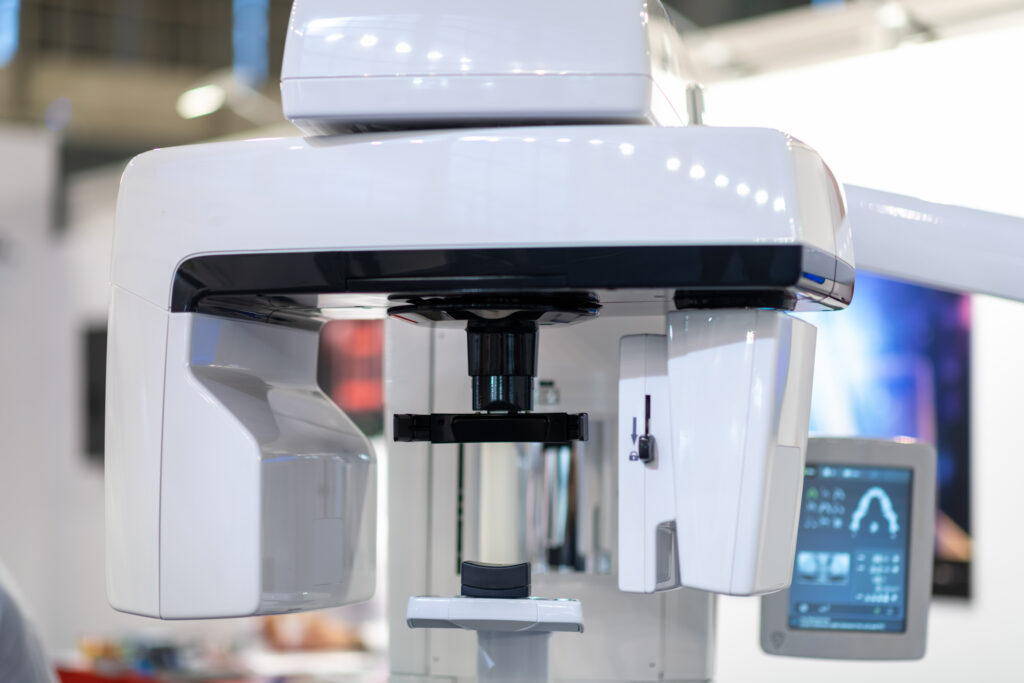
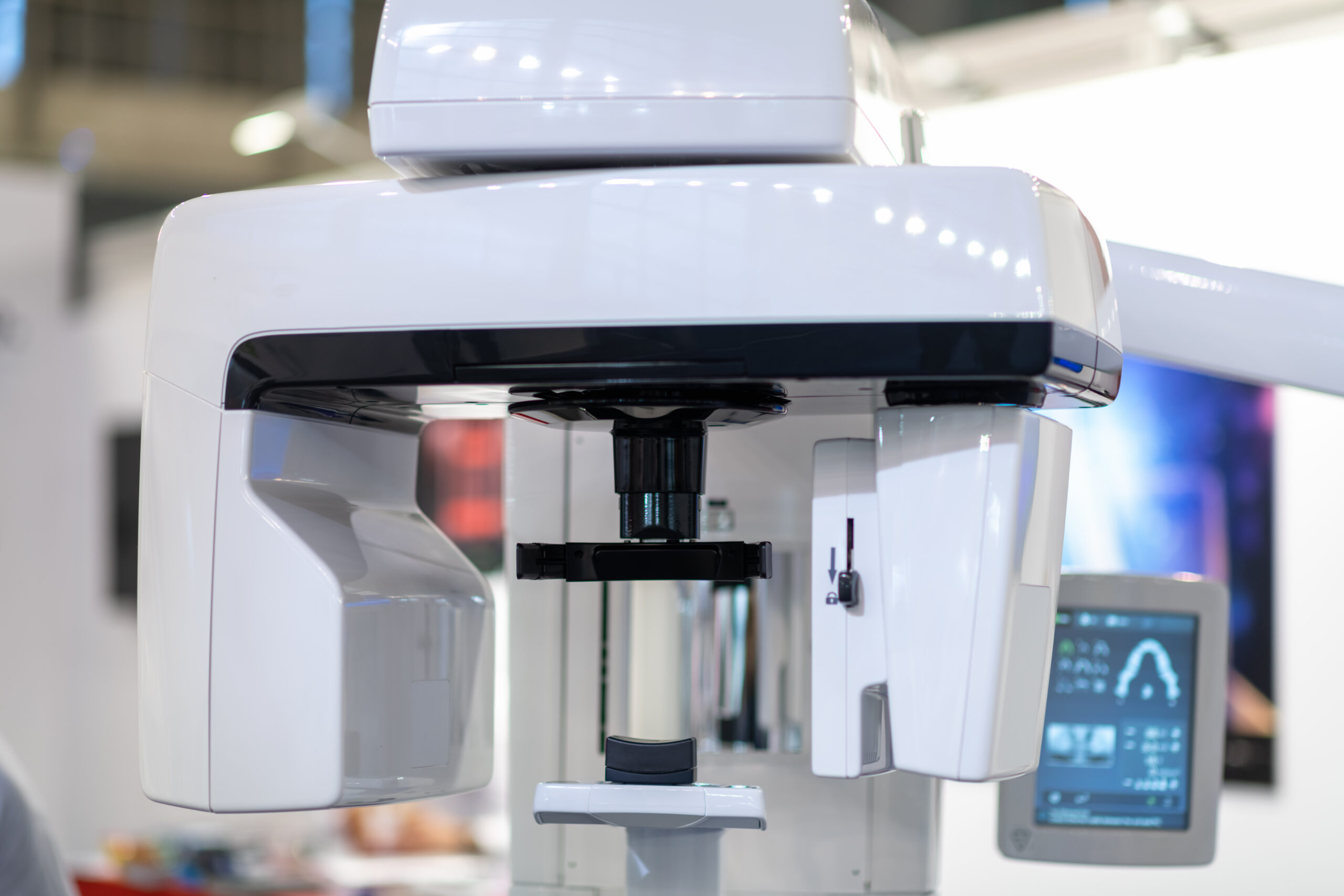
A CBCT scan (Cone Beam Computed Tomography) is a 3D dental X-ray that gives dentists a complete, rotatable view of your teeth, jaw, and bone structure. The Dental Group now offers CBCT scans at our London and Nova Scotia locations, helping our team diagnose complex cases — like root canals, surgical planning, and TMJ issues — with far more precision than a standard 2D X-ray.
If you’ve never heard of CBCT, you’re not alone. While cone beam CT imaging has been transforming diagnosis and treatment planning in leading dental practices for years, many patients are only just discovering what it means for their own care. Here’s what you need to know.
What is CBCT Scan?
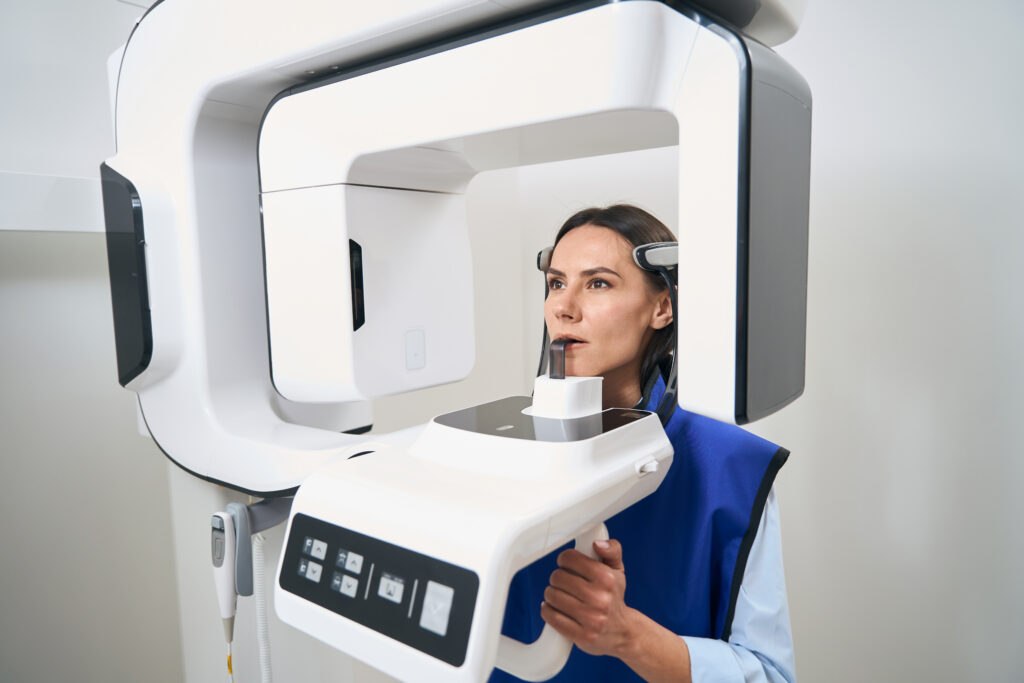
CBCT is a specialized type of X-ray technology that captures a true three-dimensional view of your teeth, jaw, soft tissues, nerve pathways, and bone structure — all in a single scan. Unlike traditional 2D X-rays, which offer a flat, single-angle image, CBCT builds a complete 3D model that our team can rotate, zoom into, and examine from every angle.
A helpful way to think about it: if a standard X-ray is one page of an encyclopedia, a CBCT scan is the entire encyclopedia. It simply gives our clinicians a far more complete picture to work from.
UNDERSTANDING THE TECHNOLOGY
What Are the Benefits of CBCT Imaging?
Adding CBCT to our practice isn’t just about upgrading equipment — it’s about improving the accuracy and confidence behind every diagnosis and treatment plan. Key benefits of 3D dental imaging include:
01
More complete diagnostic information.
CBCT can reveal extra canals, unusual root anatomy, and other details that aren’t always visible on a conventional 2D X-ray — particularly valuable in complex cases.
02
Earlier and more precise detection.
From periapical lesions to bone loss and periodontal changes, 3D imaging often catches issues sooner and more clearly than 2D imaging alone.
03
Better surgical planning.
Studies have shown CBCT imaging can provide more precise measurements than 2D images when assessing the size and scope of a lesion prior to surgery — helping your care team plan ahead with greater accuracy.
04
A clearer view for complex diagnoses.
When combined with other diagnostic tools, CBCT can support a more precise understanding of complex conditions affecting the jaw and surrounding structures.
05
Support for TMJ assessment.
CBCT is considered an effective imaging technology for evaluating a range of temporomandibular joint (TMJ) conditions.
06
A comfortable, efficient experience.
A CBCT scan takes only a few seconds longer than a traditional 2D X-ray, yet delivers significantly more diagnostic value — with no extra steps required on your part.
WHO NEEDS A CBCT SCAN?
Clinical Situations Where It's Most Beneficial
CBCT isn’t meant to replace routine 2D X-rays for every visit — for standard checkups and screenings, a conventional radiograph is often all that’s needed. Where a CBCT scan truly proves its value is in more complex cases, where standard imaging alone doesn’t tell the full story. Our dental team may recommend CBCT imaging for situations such as:
Complex root canal (endodontic) cases.
When a standard X-ray doesn’t provide enough detail, CBCT can help identify extra canals or unusual root anatomy before treatment begins.
Pre-surgical planning.
For procedures like extractions, implant placement, or treating impacted teeth, 3D imaging gives our team a much clearer picture of the surgical site, including its precise size and position.
Evaluating unclear or unusual pathology.
When combined with other diagnostic tools, CBCT can help clarify complex issues around the roots and jaw that 2D imaging alone might miss.
TMJ (jaw joint) assessment.
CBCT is a strong option for evaluating a variety of temporomandibular joint concerns, giving a fuller view of the joint structure.
In each of these situations, the goal is the same: give our clinicians the clearest possible picture before treatment begins, so decisions are made with confidence rather than guesswork.
CBCT vs. 2D X-ray: What's the Difference?
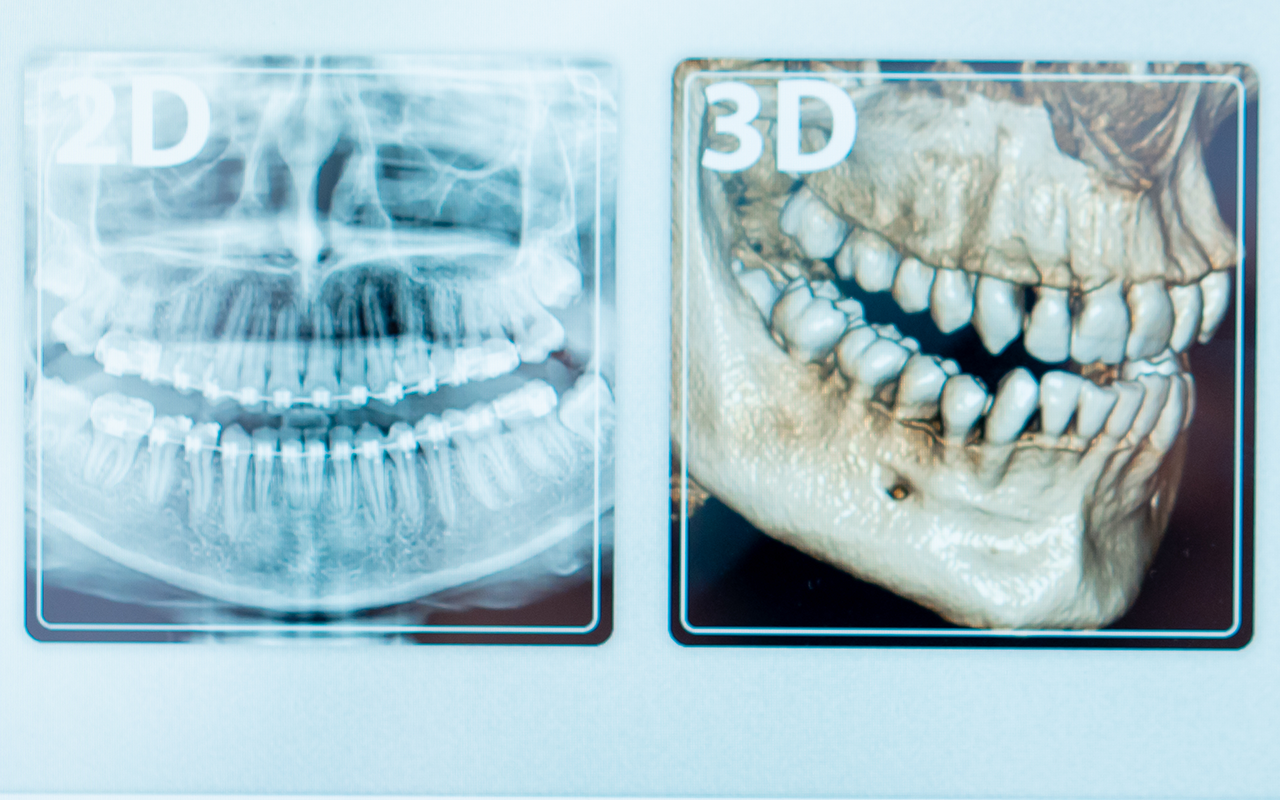
A traditional 2D X-ray is flat — a single, fixed-angle snapshot. It’s fast, low-dose, and works well for everyday needs like spotting cavities, checking bone levels, or reviewing a child’s developing teeth. But because it compresses a 3D mouth into a 2D image, some details can overlap, hide behind other structures, or simply not show up at all.
A CBCT scan, by contrast, builds a full three-dimensional model that our team can view from any angle. It takes only a few extra seconds to capture, but the added depth of information can make a meaningful difference for more involved cases.
Best for
Cavities, general bone levels, teeth alignment, routine checkups
Surgical planning, complex root canal anatomy, TMJ evaluation, impacted teeth
View
Single flat angle
Full 3D model, viewable from any angle
Detail Level
Good for everyday screening
Reveals depth, position, and structures that can overlap or hide on a 2D image
Scan Time
Fastest option
Slightly longer, with substantially more diagnostic detail
CBCT Scans Now Available in London & Nova Scotia
We’re proud to be bringing this level of advanced 3D imaging technology to our patients at our London and Nova Scotia locations. Our team has trained extensively to integrate CBCT seamlessly into our diagnostic and treatment workflows, ensuring that when this technology is used, it translates directly into better-informed decisions and better outcomes for you.
Frequently Asked Questions About CBCT Scans
Is a CBCT scan safe?
Yes. CBCT uses X-ray to build its 3D image, and our team only recommends it when the added detail will meaningfully benefit your diagnosis or treatment plan.
Does a CBCT scan take longer than a regular X-ray?
Only slightly. A CBCT scan typically takes just a few seconds longer than a traditional 2D X-ray to complete.
Will I need a CBCT scan for a routine checkup?
Usually not. CBCT is generally reserved for more complex cases — such as root canal therapy, surgical planning, or TMJ evaluation — rather than routine screenings.
Where can I get a CBCT scan at The Dental Group?
CBCT imaging is currently available at our London and Nova Scotia locations.
How do I know if I need a CBCT scan?
Our clinical team will assess your specific case and recommend CBCT imaging only when it will add real diagnostic value to your treatment.
Ready for a stress-free dental experience?
The Dental Group is here to meet you where you are.
Whether you haven’t visited in two years or twenty, we’ll help you get back on track comfortably.